Annexed and Erased: How Herat’s Distinct Identity Fuels Women’s Resistance
By Abdul Basir Azimi
Herat, the historic oasis city and recognized intellectual capital of western Afghanistan, has long been celebrated as a cradle of poetry, philosophy, and independent thought. Herati women and girls were not mere observers of history; they were the architects of a modern society, commanding university lecture halls, economic marketplaces, and media landscapes.
Today, although the administrative transition has imposed a heavy silence over the city, Herat has not surrendered. Under the tightening decrees that the international community increasingly terms "gender apartheid," the women and girls of Herat have risen to become the living symbols and unofficial capital of the social advocacy for women's civic rights. Herat is no longer just a victimized city; it is the front line of the struggle for the preservation of systemic freedoms.
A Captive City: Herat’s Distinct Identity and Imperial Annexation
To fully understand why Herat has emerged as a primary nucleus of social non-compliance, one must look at the deep-seated historical and cultural friction between the city and centralized rule. Historically and culturally, Herat was the crown jewel of the greater Khorasan region. For centuries, its architecture, Persian-speaking (Tajik/Farsiwan) demographics, and political ties aligned it far more closely with the Persianate world and the legacy of the Timurid Renaissance than with the Durrani Pashtun tribal confederations based in Kabul and Kandahar.
In his thesis, Borasio utilizes G. J. Alder's authoritative, two-part scholarly series, "The Key to India? Britain and the Herat Problem, 1830–1863" (published in Middle Eastern Studies, 1974), to examine how British officials historically perceived the city (Borasio, 2018). During the "Great Game," British administrators and diplomats heavily debated whether Herat should be permanently integrated into the newly consolidating state of Afghanistan or protected as an independent principality. The British ultimately resisted Persian attempts to reclaim the city—such as during the 1837 Siege of Herat—because they feared that a Persian-controlled Herat would act as a gateway for the Russian Empire to march toward British India (Borasio, 2018).
As a result, British imperial policy intentionally helped cement Herat within the borders of modern Afghanistan to serve as a strategic buffer zone. This led to its final, forced annexation in May 1863 under Amir Dost Mohammad Khan following a brutal ten-month siege. Its inclusion into the modern Afghan state project remains an artificial, forced product of imperial border-drawing rather than a shared domestic identity.
This history of forced subjugation by outside powers did not crush Herat; instead, it forged an enduring legacy of defiance. Because the city was violently welded to a state apparatus it culturally and intellectually outpaced, Heratis developed a distinct political consciousness rooted in preserving their unique heritage against external domestication. Over subsequent generations, this collective memory of survival transformed the home and the classroom into fortresses of cultural preservation. When the modern crisis of 2021 struck, it was the daughters of this resilient oasis who inherited the mantle of dissent.
Because of this unique heritage, Herati women view themselves not as submissive citizens, but as the frontline defenders of a distinct cultural territory navigating a highly restrictive administrative framework:
-
The Identity of Herat: Predominantly Persian-speaking (Farsi/Dari), highly urbanized, secularly inclined, and historically pluralistic. Its society inherently values egalitarianism and the authoritative presence of women in public, economic, and intellectual life.
-
The Governance Model of the Authorities: Grounded in a highly specific interpretation of rural traditional codes and village customs. Their restrictive decrees—particularly the bans on female higher education, economic participation, and access to communal spaces—are presented by officials as an implementation of legal order. However, independent analysts point out that these mandates reflect the aggressive enforcement of insular, patriarchal customs unique to remote agrarian villages, using religious framing to standardize a social structure that restricts women's public agency.
When centralized frameworks are applied to Herat, local urban populations encounter a governance model fundamentally detached from their historical civic life. To the current leadership, Herat's urban refinement, its Persian cultural pride, and especially its educated, independent women present a direct challenge to the uniform implementation of their institutional vision. The current enforcement measures directed at Herati women represent a calculated effort by a traditional, centralized leadership apparatus to restrict and manage a sophisticated urban culture that possesses values inherently distinct from their own.
A Legacy of State Discrimination: Systematic Marginalization by Kabul and Kandahar
The current uprising of Herati women is built upon more than a century of defiance against systemic discrimination engineered by successive central governments and ethno-political power centers in Kabul and Kandahar. For generations, the ruling elite has viewed Herat’s wealth, high literacy rates, and distinct Persianate identity with deep-seated anxiety, systematically working to marginalize the province to prevent the rise of an autonomous western power bloc.
This institutional discrimination has historically manifested across three distinct fronts:
1. Fiscal Extortion and the Revenue Trap
For generations, Herat has served as Afghanistan's primary economic engine, generating immense customs revenues from its lucrative trade borders with Iran and Turkmenistan. Yet, central administrations in Kabul systematically treated Herat as an internal colony to be plundered. Massive trade revenues were aggressively extracted to fund centralized federal budgets, while Kabul intentionally starved Herat of economic reinvestment. By deliberately keeping local infrastructure weak and underfunded, the state ensured that Herat's wealth was weaponized to enrich the center while capping the province’s domestic growth.
2. Institutional Engineering via the Kankor Exam Quotas
During the era of the Islamic Republic, this discrimination targeted the intellectual future of Herati youth, particularly young women. While Western donors poured billions into female empowerment, Kabul engineered ethnocentric regional quotas within the national Kankor university entrance exam. This structural barricade artificially inflated admission scores for urban centers like Herat while lowering them for provinces loyal to the ruling elite. Brilliant Herati girls who scored near-perfect marks were routinely blocked from securing placements in elite medical, engineering, and legal faculties—a calculated attempt by Kabul to stunt the rise of a highly educated, independent western intelligentsia.
3. Bureaucratic Domestication and Security Sabotage
To suppress local leadership, Kabul and Kandahar routinely enforced a policy of bureaucratic erasure, bypassing local Herati administrators to systematically appoint external governors, military commanders, and security chiefs from the southern and eastern Pashtun tribal belts. Furthermore, Kabul routinely starved Herat’s outlying rural districts—such as Shindand and Gulran—of defense resources. This deliberate underfunding created a security vacuum that allowed rural fundamentalist insurgencies to fester right outside the city lines.
What makes the current situation so tragic is that the current leadership has built upon the very rural underdevelopment, isolationism, and administrative erasure engineered by previous Kabul administrations to establish their current presence over the city. But the women of Herat, drawing from their long history of fighting state marginalization, have turned this space into the absolute center of civil and intellectual non-compliance.
The Engineered Betrayal: How Ashraf Ghani Submitted Women to the Taliban
This long-standing friction reached its nadir on August 15, 2021, when former President Ashraf Ghani abruptly fled the country by helicopter as forces entered Kabul. Ghani's sudden escape was not a mere political collapse; it was a deliberate, calculated capitulation.
Ghani knew exactly who the incoming authorities were, and he was fully aware of the consequences his actions would have on the nation's female population. Throughout the intra-Afghan negotiations, Ghani intentionally sabotaged the peace process and refused to mount a real defensive strategy, prioritizing his personal political survival above all else. When that survival was no longer guaranteed, he chose to completely hollow out the state's protective structures rather than empower his domestic rivals to fight back.
Ultimately, Ghani made a conscious choice to submit the girls and women of Afghanistan to the incoming regime. After years of cynically using women’s rights as a public shield to secure billions in foreign aid, he abandoned them without a leadership structure or any legal protections. He traded the education, freedom, and futures of an entire generation of women to guarantee his own safe escape. Today, from a safe exile, he continues to publish tone-deaf digital manifestos that passively legitimize the very restrictions he left behind, cementing his legacy as the ultimate architect of their betrayal.
Disruption of Mandatory Directives: Women Holding the Line
Rather than retreating into despair, the women of Herat have launched an extensive civil response against institutional mandates. Every edict issued by the administration has been met with tactical non-compliance:
-
Educational Non-Compliance: In response to the bans on formal education for girls beyond the sixth grade and the closure of universities, Herati women have established alternative educational frameworks. Herat has become the central hub of underground classrooms and private home academies. Here, female educators operate at great personal risk to instruct the next generation in sciences, literature, and mathematics.
-
Economic and Civic Resilience: Stringent enforcement measures targeting women in marketplaces under dress code regulations have failed to break their economic line of defense. Denied the right to standard public employment or to manage storefronts, Herati women have moved their operations entirely indoors, establishing extensive home-based trade networks. Furthermore, when formal regulations limited women's presence in standard communal spaces, Herati women adapted by transforming their private living rooms into solidarity networks and centers for community support.
The Jebrail District Demonstration of June 2026
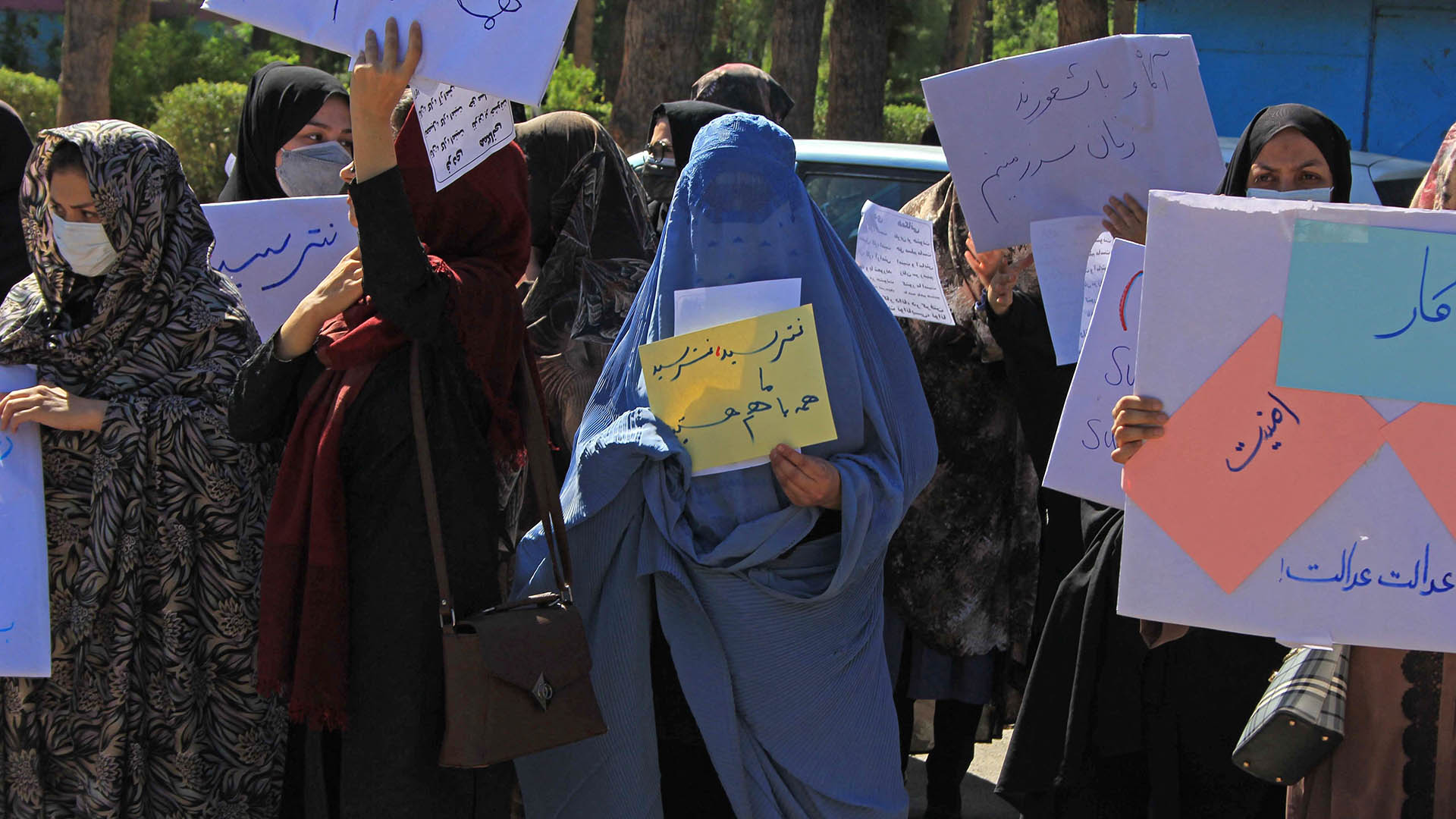
In early June 2026, the quiet non-compliance of Herat manifested in public civil assemblies. Following an escalation of strict enforcements and detentions carried out by the morality police regarding compliance codes for young girls, the women of Herat channeled these challenges into public unity.
In a significant display of public concern, groups of Herati women and girls, supported by local community members marching alongside them, gathered in the streets of the Jebrail district in Herat. They called directly for the protection of fundamental social rights, raising chants for "Education, work, and freedom." The subsequent restrictive security response by the local administration has spotlighted Herat on the world stage as a major center for independent civil advocacy.
A Call to the Global Conscience: Supporting Herat’s Women as Catalysts for Change
The struggle of the women and girls in Herat is not a passive plea for humanitarian aid; it is an active, conscious, and principle-based defense against complete social exclusion. They are maintaining essential educational and cultural spaces in a manner that influences the broader future of human rights in the region.
True progress across Afghanistan cannot be achieved by viewing its female population merely through the lens of passive victimhood. Instead, the international community and global leaders must recognize the women and girls of Herat as essential catalysts for foundational societal change. By establishing underground schools, keeping hidden trade networks alive, and peacefully asserting their presence in the public sphere, they are keeping the flame of knowledge burning under the most difficult structural conditions.
Supporting Herat's women and girls is not just a moral obligation—it is a strategic necessity for the future of the country. They are the frontline educators, innovators, and leaders who possess the resilience required to break through systemic isolation. Global institutions, educational funds, and human rights bodies must actively back their grassroots efforts, providing them with the resources and digital infrastructure needed to sustain their networks. The women and girls of Herat are taking profound personal risks to keep the gates of knowledge open; the world must possess the shared commitment to stand behind them, ensuring that they can fulfill their role as the ultimate catalysts to bring education, freedom, and empowerment to every woman and girl throughout the nation.
Abdul Basir Azimi is a former Research Fellow at the Afghan Institute for Strategic Studies (AISS) with over 12 years of experience in government, international organizations, project management, and research. He holds an MBA and a bachelor’s degree in Civil Engineering, and is certified as PMP, PgMP, and PfMP by the Project Management Institute.
Academicians and Officials interested in publishing their academic pieces on this page, please approach us through contact@aissonline.org.
The article does not reflect the official opinion of the AISS.