Endless wars; The Need for United Nations Reform
By Neelapu Shanti
The United Nations Organisation (UNO) has the potential to shape the future world order. It is no secret that today the geopolitical, monetary and trade systems are not conducive to the growth and well-being of countries, especially the Global South. Europe, an economically and technologically developed sixth-largest continent in the world, has also been affected with its manufacturing hitting the downward spiral due to engineered supply chain issues.
Conflicts and geopolitical competitions are impinging on the stability of countries, affecting peace and their growth. The world including the major powers and smaller countries, has lost faith in the UNO as an efficient and fair organisation capable of handling various problems of the world and individual countries. With the P-5 (US, Britain, France, Russia and China) dominating the world body with veto power, smaller nations are rendered voiceless and important issues requiring decisions are left unattended.
The Founding Principles of the United Nations
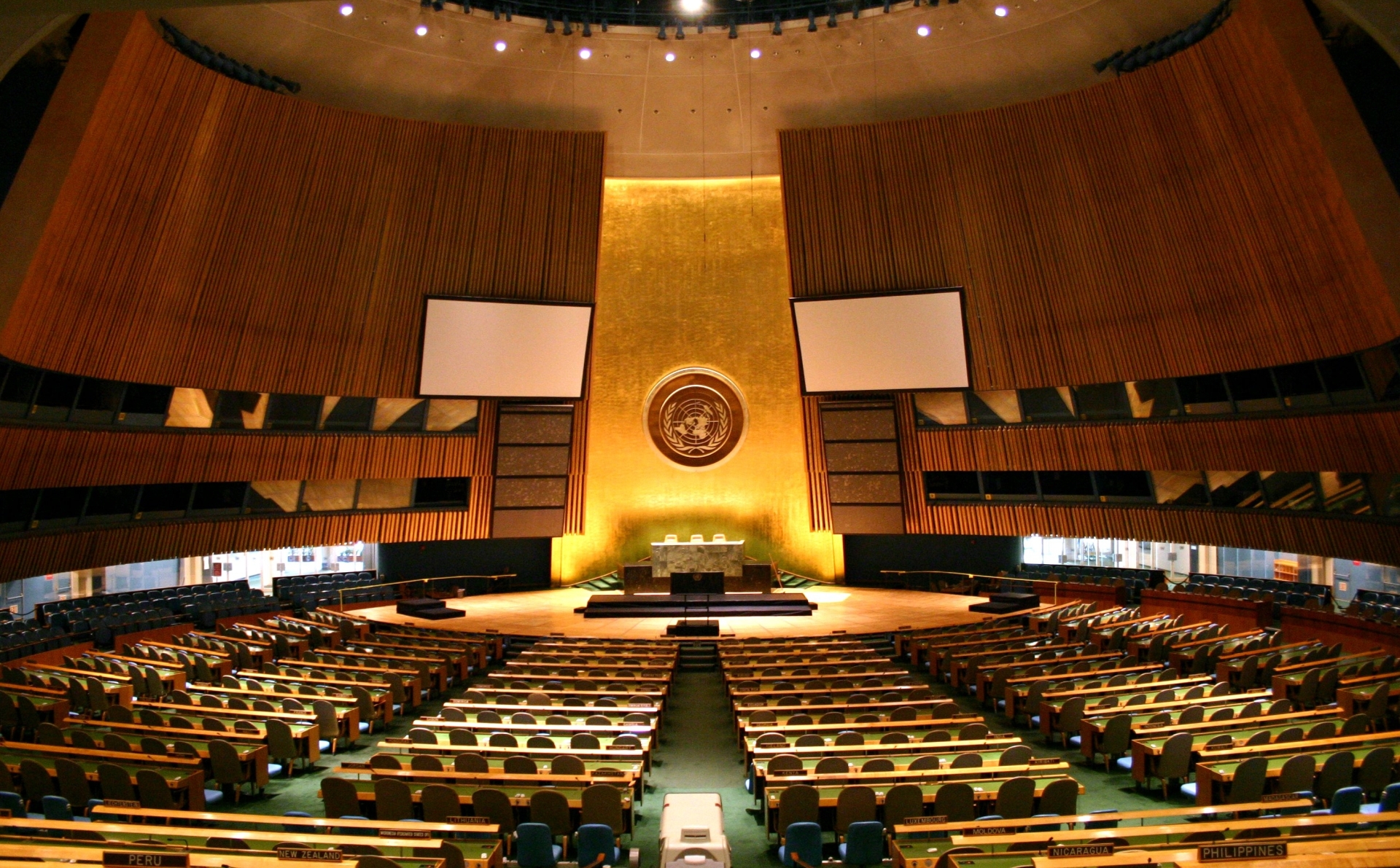
The UNO is an international organisation founded in 1945 after the Second World War, based on the prevailing conditions and the need for such an organisation. The UN initially started with 51 member states, and today, the organisation, which is headquartered in New York City, has 193 Member States.
The Secretary-General is the Chief Administrative Officer of the UN who is appointed by the General Assembly on the recommendations of the Security Council for a 5-year term which is extendable. The main bodies of the UN are the General Assembly (UNGA), the Security Council (UNSC), the Economic and Social Council (ECOSOC), the Trusteeship Council, the International Court of Justice (ICJ), and the UN Secretariat.
The organisation’s purpose and principles are outlined in the U.N. Charter. According to the document, the United Nations’ four main purposes are to: Maintain international peace and security; develop friendly relations among nations; achieve international cooperation in solving international problems; and be a center for harmonizing the actions of nations in the attainment of these common goals.
The vision of the UN is to pursue and address the core issues of peace and security. The UNSC was conceived as the international community's ultimate enforcement instrument to address these core issues. Over the past 75 years, ever since the creation of the UN, the credibility and efficacy of its instruments to overcome the threats of conflicts, violence and war, as well as their impact on the economy and social order of the countries concerned, have been negligible to be considered effective. The world therefore is longing for an organisation that is effective and prompt in performing its role as a guardian of international peace and security.
What should be the Role of the UN?
Peace cannot be built as long as there are no consensus-based rules, or institutions to monitor and implement rules. This requires institutions like the United Nations to be more effective and accountable in a world that is reeling under unmanageable wars.
The United Nations Security Council (UNSC) which was expected to bring about and maintain peace in the world, has itself become an instrument aiding disputes and wars, unable to act in the interest of the people of the larger world.
Therefore, UN reform is required to address the shortcomings of the present system and to ensure peace, good governance, and institutions that are independent and capable of upholding rules and their convictions when the interests of people and countries clash.
Terrorism that is being used as a proxy, by funding and equipping unemployed youth to settle scores with countries, is a disruption that needs to be ended to achieve peace and stability in the world. The world needs a neutral body like UNO with adequate powers to enforce agreed-upon rules to ensure peace and stability.
The world cannot be a peaceful place unless the people of the world and their families have hope in improving their quality of life and believe themselves to be a part of a larger world. The question is how to bring about such a belief in people's minds.
Progress and development cannot be achieved unless people are led by dedicated individuals and the number of working hands in a society is increased by accepting women as equal partners. Education has got to be made meaningful to meet the needs of development and society. Skill development is yet another focal area for a better future.
An overreaching challenge that comes in the way of the UNO in implementing its mandate has been discussed in the subsequent paragraphs.
1. Changed Conditions
The United Nations was established on October 25, 1945, immediately after World War II when international leaders felt the need to create a new global organisation to maintain peace, avoid the abuses of war, provide humanitarian assistance to those in need, protect human rights, and uphold international law.
Today, the circumstances have changed. The world and the countries of the world have undergone a huge transformation with increased population, technological innovations and complicated political realities.
Countries have become richer, and technologically, the world has become aware of the new innovations and their usefulness in governance, economic growth and warfare. With conflicts all over the world, terrorism has become a reality. Geopolitical considerations of the major powers have overtaken the need for the well-being of humanity.
2. Disintegration of the Soviet Union
With the disintegration of the Soviet Union, a unipolar world led by superpowers has emerged resulting in imbalances in the power equations both regionally and in the world as a whole. The superpower countries, as a result, have dominated and have been influencing global politics. This power imbalance has led major powers to seek allies and create their own spheres of influence.
With the growth of China’s economy, military power and technological capability, an unhealthy competition is emerging between the superpowers resulting in situations that may result in a conflict. With superpowers having veto power, the UN is unable to influence the emerging situations to restore a relationship of healthy competition between the countries.
The UN should make efforts to end the unipolar world and bring about a multi-polar world order.
3. Monetary Issue-SWIFT
Monetary issues have also caused upheaval worldwide. The Society for Worldwide Interbank Financial Telecommunications (SWIFT), a common system for use by the entire world consisting of rules, mechanisms, and institutions that govern monetary arrangements and capital flows between countries that have been developed over decades, has come under strain.
Unilateral sanctions have been preventing the use of the SWIFT mechanism by certain countries and the confiscation of dollar reserves has defeated the basic principle of an unpoliticized common and neutral currency as decided at the Bretton Woods conference in 1944. The translation of political goals into an economic and trade crisis is not in the interest of the world’s economy, trade and well-being.
4. International Trade and Supply Chain Disputes
Geopolitical tensions have had a profound impact on the international trade and supply chain management system creating trade barriers, and disrupting supply chains. The world has been witnessing a backlash against global trade through geopolitical tools such as sanctions, embargoes, and tariffs imposed on countries.
Ever since the war started between Russia and Ukraine in 2022, Western countries have imposed sanctions on Russia intended to limit its capabilities.
Focusing on the South China Sea dispute and the war in the Middle East has exacerbated the potential trade growth that should happen in a globalized world. Conflict arising due to geopolitical issues reduces Foreign Direct Investment (FDI).
The US-China trade war, for instance, has caused many businesses to diversify their supply chains, leading to increased trade between the US and countries such as Vietnam and Mexico.
5. Wars and Conflicts: The Peace Crisis
(A) Yugoslavia War: An Unauthorized War
The North Atlantic Treaty Organization (NATO) conducted ‘Operation Allied Force’, a bombing campaign against the Federal Republic of Yugoslavia (FRY) from 24 March 1999 to 09 June 1999, a 78-day air war against Serbia. Unlike Operation ‘Deliberate Force’ in 1995, which was conducted against ethnic Serb and Serb-allied forces in Bosnia, Operation Allied Force was conducted against a sovereign nation, Serbia.
Allegations have been made that, as NATO’s resort to force was neither authorised by the Security Council nor was it in self-defense and as such the resort to force was illegal and, consequently, all forceful measures taken by NATO were unlawful.
UN Charter in general, provides that states may use force in self-defense (individual or collective) and for very few other purposes. In particular, the legitimacy of the presumed basis for the NATO bombing campaign, humanitarian intervention without prior Security Council authorisation, is hotly debated. That being said, the crime related to an unlawful decision to use force is the crime against peace.
Some estimates suggest 250 000 dead and 2.7 million refugees and displaced persons in Bosnia - one-third of the pre-war population.
(B) Syria Conflict: The War that Gave a Fillip to Terrorism
The Syrian conflict since 2011 was an attempt at ‘a regime change’ in Syria. Irrespective of differences between countries, the larger aim ought to have been to resolve issues amicably, help the country's citizens, and maintain peace. Intervention by both regional and global powers to engineer a ‘regime change’ is unauthorised and goes against the UN Charter.
Unfortunately, due to the very nature of the present UN structure, the UNO has been a failure in resolving the Syrian issue, resulting in loss of life, destruction and a number of Syrians being rendered homeless besides creating a huge refugee crisis in Europe.
Added to this, the situation created has radicalised civil society with terrorists from across the globe assembling in Syria. The economy of Syria has been shattered with the common people of Syria bearing the costs of the engineered terror war.
The whole Syrian episode bears a lesson on how terrorism is supported and allowed to flourish, which is not in the interest of the larger world. Geopolitical ambitions of countries cannot be allowed to create chaos, loss of blood, destruction and shatter the economy and well-being of countries and people.
(C) Iraq War- A Regime Change Exercise on Fabricated Stories
After 9/11, the US took a unilateral decision to attack Iraq, alleging Iraqi possession of Weapons of Mass Destruction (WMD) which could be used against it. The UN did not authorise the war. The sad part of it is that Iraq was neither involved in 9/11 nor did it possess WMD. Saddam Hussein, the Iraqi ruler, was killed. Obviously, the whole war was aimed at ‘regime change’ in Iraq. Should such purposeful miscalculations occur in a civilsed world?
UN again proved incapable of preventing the war or punishing the decision-makers so as to prevent recurrence of such unethical wars in the world. Iraq, which had not seen terrorism during Saddam Hussein’s tenure as its president, became a terror hub following the US attack on the country.
(D) Afghanistan Conflict- Unending Plight of Afghan People
The Soviet invasion of Afghanistan lasted from late Dec 1979 till mid Feb 1989, resulting in the disintegration of the Soviet Union. Following Soviet withdrawal, the Taliban ruled Afghanistan from 1996 to Oct 2001. Despite the elected governments, the US wielded enormous power, and as a result, when the US decided to withdraw from Afghanistan, it entered into dialogue with the Taliban without involving the elected Governments and decided on its own to hand over the country to the terrorist outfit.
Politics apart, the people of Afghanistan were forced to live under the shadow of guns right from 1979 and are still suffering under the Taliban rule. Should it not be the responsibility of the United Nations to have intervened in Afghanistan and to establish them?
Subsequently, the Russia-Ukraine war began at a time when the US failed to keep its word that the North Atlantic Treaty Organisation (NATO) would not move ‘An Inch Eastwards’. Despite there being various written records in which the US agreed not to move even an inch eastward, the war still erupted. In other words, containing Russia is an existential threat to its security and integrity.
Taiwan is China’s territory. To date, none of the countries and international organisations have recognised Taiwan as an independent country, including the UN, the US, and others, barring a few smaller and insignificant countries.
(E) Iran-Israel-US War
The Joint Comprehensive Plan of Action (JCPOA) was a landmark nuclear agreement initiated and signed under the leadership of former U.S. President Barack Obama after years of intense negotiations spanning nearly four to five years. Despite the agreement’s multilateral nature—comprising Iran and the P5+1 countries (the U.S., U.K., France, Russia, China, and Germany)— President Donald Trump unilaterally withdrew the United States from the JCPOA in 2018.
The former U.S. Director of National Intelligence, Tulsi Gabbard, has offered a measured and fact-based assessment of Iran’s nuclear ambitions. In her March 2025 briefing to Congress, she emphasized that U.S. intelligence does not currently assess Iran to be actively developing a nuclear weapon.
2. Domination by Major Powers
The P-5, the exclusive nuclear club dominating the UNSC, wields enormous power at the UNSC, whose powers are unchecked. The veto powers vested in these countries enable each of these countries to take decisions or block proposals made by the rest of its members to suit their own strategic interests and political motives rather than addressing international issues including crisis situations. As a result, problems of the world remain unsolved and, most of the time escalates to the detriment of peace. More than anything else, the present system creates an alliance system, consequent to the desire of non-UNSC members seeking to represent and safeguard their interests.
The P-5 is not a representative body of the world but they sit in judgment of issues relating to countries that they do not represent. Continents such as Africa, South America, South Asia, East Asia and Southeast Asia and Central Asia are not represented in the UNSC.
3. Democratising UNSC
Democratising the UNSC adds to the logic of the decisions made by the UNSC without in any way compromising on the interests of the region. It therefore follows that as a first step, the veto powers vested in a few countries need to be removed. Unlike the General Assembly, the UNSC does not have true international representation.
The organisation needs to become more inclusive with each member becoming the spokesperson of the region that they represent. It may also be desirable to have regional groupings to meet periodically to elect their representative to the world body, discuss issues affecting the region and policies relating to international issues. The UNSC member of the region can then air the views of the constituency that he represents at the world body.
The need, therefore, is to expand the number of permanent members to the UNSC to include non-nuclear powers, representing various regions of the world, and remove the veto powers of countries that result in the world body remaining an indecisive and negative setup. A system of voting by the UNSC member states on important issues needs to be introduced with a majority rather than a veto deciding the fate of important issues under discussion.
4. Monitoring and Implementation Powers to UNSC
The UNSC and UNO pass resolutions after due deliberation by the body's members. Deliberations and decisions of the world body are meaningless unless the implementation of the decisions is monitored by a nominated UN body and the implementation ensured in time, The UN-nominated instrument needs to be vested with powers to investigate issues and initiate cases for punishing the errant country by the apex UN body.
For example, rightly or wrongly, the UN passed Resolution 242 in Nov 1967, which reaffirmed that the establishment by Israel of settlements in the Palestinian territory occupied since 1967, including East Jerusalem, had no legal validity and constituted a flagrant violation under international law and a major obstacle to the achievement of the two-state solution.
However, as can be seen, Israel failed to implement the UN Resolution and continued to establish settlements in the West Bank, East Jerusalem and the Golan Heights, rendering the world body meaningless. Had there been a monitoring mechanism, and the UN been vested with the power to implement its decisions, the present situation in the Middle East may not have arisen.
In the case of Afghanistan, Russia and India abstained from voting against the Taliban for human rights violations against women’
Powers to the World Body will reflect the strength of the World Body, with hopes for a rule-based order in the future.
5. Making Rules-the business of the World Body
Presently, powerful countries of the world make rules to be followed by the countries and implement them as it suits them depending on the circumstances. This needs to end. UN needs to have a body to make rules which will have to be debated and passed by the UN. Once passed, its implementation needs to be universal without exception.
Alongside the rules, the world body needs to have a World Court to interpret the rules and ensure compliance with the power to punish violations of rules, be it by individuals or by countries of the world.
Conclusion
Contributions to run the world body need to be fixed and countries contributing a larger share should not be allowed to have a say in the running of the establishment.
To make UNO an effective mechanism, it is also important to structure the funding system that should be adopted proportionately by the various member countries in a fair manner based on the Gross Domestic Product (GDP) of the country, the size of the country and the population so that countries do not take advantage of the organisation by funding.
The world needs a neutral body like UNO with adequate powers to enforce a rule-based order and it should ensure that there is peace and stability in the region.
Neelapu Shanti is a New Delhi Based international affairs research analyst, writer, journalist and Indo-Afghan analyst. MA in International Relations Post-Graduate in Journalism.
Academicians and Officials interested in publishing their academic pieces on this page, please approach us through contact@aissonline.org.
The article does not reflect the official opinion of the AISS.