
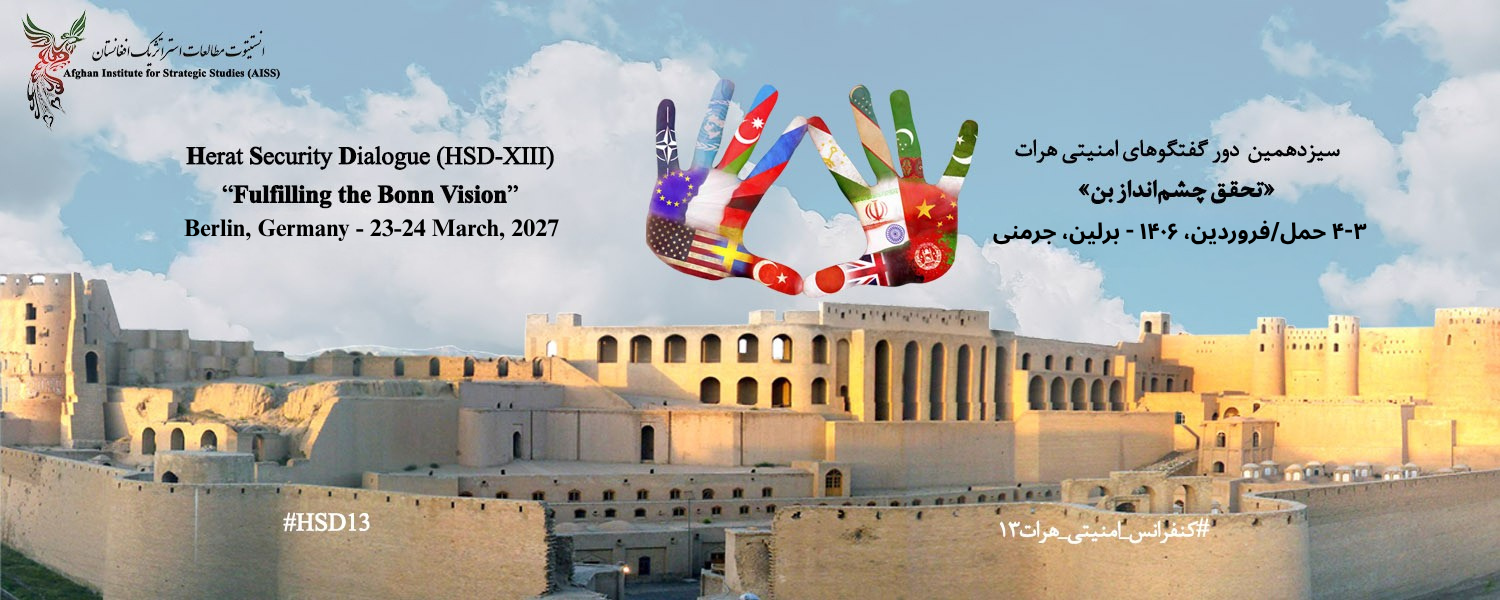
Concept Note
Background
After the tragic events of September 11, 2001, Afghanistan became the epicentre of the global war on terrorism and an unprecedented international state-building effort. For the first time, there was a convergence between global security interests and the Afghans’ longstanding aspirations for a representative and constitutional political order. This historic convergence began in Bonn, Germany, where the UN-led Bonn Conference on Afghanistan (December 2001) charted a roadmap for Afghanistan’s political transition. The ensuing Bonn Process led to the establishment of successive elected governments and was symbolized by the ratification of the 2004 Constitution, representing a moment of optimism and national renewal. However, the Bonn Process was marred by deep structural flaws and political miscalculations. From the imposition of a highly centralized presidential system unsuited to Afghanistan’s diverse social fabric, to the overreach of external actors - notably the disproportionate role played by Afghan-born U.S. envoy Zalmay Khalilzad - the process evolved into an externally driven, elite-centric project. The revival of discredited Mujahideen factions further alienated the citizenry and undermined state legitimacy.
The Iraq War (2003) fractured the fragile regional consensus on Afghanistan, giving rise to a regional realignment centred around anti-Americanism and the gradual reconstitution of the Taliban insurgency. The ensuing years saw the replacement of the Bonn spirit with what many analysts term the “Doha Creep” - a decade-long process that normalized the Taliban as a “government-in-waiting.” The Doha Agreement (2020) ultimately paved the way for the Taliban’s return to power in August 2021, undoing two decades of international and national efforts. The subsequent phase - the “Doha Delusion” - has been characterized by misplaced optimism that the Taliban could evolve into a conservative yet developmental, cooperative, and responsive governing entity. This assumption has been decisively refuted by Afghanistan’s deepening humanitarian catastrophe, political repression, gender apartheid, and isolation from the international community. Today, Afghanistan faces a profound crisis of governance, legitimacy, and humanity. The paralysis of global and regional policy, coupled with fractured Afghan constituencies, demands a fundamental rethinking of strategies to mitigate the country’s deepening crises.
Objectives
The 13th Herat Security Dialogue (HSD-13) will serve as a critical platform for inclusive, evidence-based, and future-oriented dialogue on Afghanistan’s trajectory and the broader regional and global implications.
The Dialogue aims to:
- Revisit the original “Bonn Vision” - a pluralistic, constitutional, and peaceful Afghanistan integrated into the regional and international community.
- Assess the cumulative impact of the Bonn Process, Doha Process, and subsequent regional dynamics.
- Facilitate policy innovation and coordinated strategies among Afghan, regional, and international actors to address the multifaceted Afghan crisis.
- Reaffirm the principles of inclusivity, openness, and collective responsibility that have guided the HSD since its inception.
Conference Themes and Working Panels
HSD-13 will convene leading policymakers, scholars, civil society leaders, and international experts for two days of plenary discussions, thematic panels, and cultural exchange.
Proposed thematic panels include:
Proposed thematic panels include:
- Terrorism in the Age of “Wokism”, AI, and Great Power Competition
- Examining the evolution of terrorism under shifting ideological, technological, and geopolitical conditions. - Muslim Women: Agency, Identity, and Power
- Exploring women’s rights, leadership, and resilience under repressive regimes. - Migration: Fear, Responsibility, Solidarity
- Addressing forced displacement and ethical responses by host societies. - Generation Z and Civic Resistance
- Highlighting the role of youth and digital activism in shaping future political cultures. - Constitutionalism and Consensus Building
- Revisiting Afghanistan’s constitutional journey and prospects for inclusive political frameworks. - Aid Accountability
- Evaluating international aid mechanisms, transparency, and the moral economy of humanitarian assistance. - Diaspora Politics and Independent Media
- Assessing the influence of the Afghan diaspora and media independence in shaping discourse. - Afghanistan–Pakistan: Paradigm Shift?
- Analyzing evolving bilateral dynamics and regional security realignments. - Great Power Competition: Shared Responsibilities
- Examining opportunities for constructive engagement among global powers on Afghanistan. - Religiosity in the Age of AI
- Interrogating how artificial intelligence is reshaping faith, spiritual authority, and the human quest for meaning.
Format and Activities
The Dialogue will feature:
- Opening and closing plenary sessions with keynote speeches from distinguished policymakers and scholars.
- Thematic working panels for in-depth policy discussions.
- Book launch and academic presentations showcasing new research on Afghanistan and regional issues.
- Cultural evening celebrating the shared artistic, linguistic, and cultural heritage of Afghanistan and its neighbours.
Participants
Participants will include:
- Afghan political leaders, scholars, and civil society representatives (inside and outside Afghanistan).
- Regional experts and diplomats from neighbouring states.
- Representatives from the UN, EU, and other international organizations.
- Academics, policy analysts, and journalists from the wider international community.
Expected Outcomes
- Renewed articulation of the “Bonn Vision” adapted to contemporary realities.
- A set of policy recommendations for regional and international stakeholders.
- Strengthened dialogue networks among Afghan and global experts.
- Increased awareness and advocacy for a rights-based, inclusive, and constitutional political future for Afghanistan.
Guiding Principles
Since its inaugural session in Herat (2012–2020) and its subsequent meetings in Dushanbe (2022–2023) and Madrid (2025), the Herat Security Dialogue has upheld the values of inclusivity, openness, and intellectual integrity. The 13th round in Berlin will carry forward this legacy, reaffirming the Dialogue’s role as a bridge between Afghans, their region, and the international community.